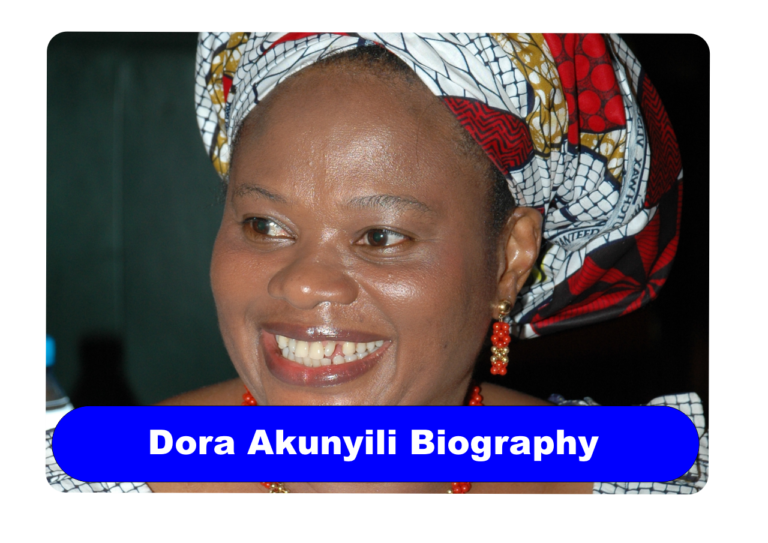
Dora Akunyili was Nigeria’s NAFDAC reformer and former information minister. Discover her age at death, husband, six children, education, awards and legacy.
Dora Akunyili was a Nigerian pharmacist, professor, and public servant who became widely known for fighting counterfeit medicines. This Dora Akunyili biography covers her age, husband, children, education, political career, and lasting influence on public health. As director-general of the National Agency for Food and Drug Administration and Control (NAFDAC), she challenged a dangerous trade that put patients’ lives at risk.
Born on 14 July 1954, Akunyili rose from university teaching to lead one of Nigeria’s most important regulatory agencies. She later served as Minister of Information and Communications and received international recognition for her work against corruption. She died of cancer on 7 June 2014, aged 59, but her reforms remain an important part of Nigeria’s public health history.
Quick Facts About Dora Akunyili
| Detail | Information |
|---|---|
| Full Name | Dora Nkem Akunyili (née Edemobi) |
| Date of Birth | 14 July 1954 |
| Date of Death | 7 June 2014 |
| Age at Death | 59 years |
| Birthplace | Makurdi, present-day Benue State, Nigeria |
| State of Origin | Anambra State |
| Profession | Pharmacist, professor, and public servant |
| Husband | Dr. Chike Akunyili |
| Children | Six |
| Education | University of Nigeria, Nsukka |
| Known For | NAFDAC reforms and the fight against fake drugs |
| Government Positions | NAFDAC Director-General; Minister of Information and Communications |
Dora Akunyili’s Early Life and Family Background
Dora Nkem Edemobi was born in Makurdi on 14 July 1954 to Chief and Mrs. Paul Young Edemobi. Her family originally came from Nanka in present-day Anambra State. She spent part of her childhood in Makurdi before moving to Isuofia, where she lived with her grandmother and continued her schooling.
Akunyili showed strong academic ability from an early age and frequently performed well in school. Scholarships helped her continue her education and shaped her commitment to public service. Her academic success continued despite changes in her schooling and living arrangements.
Education at the University of Nigeria, Nsukka
Akunyili attended Holy Ghost Primary School in Makurdi and St. Patrick’s Primary School in Isuofia. She continued her education at Queen of the Rosary Secondary School in Nsukka, earning excellent results. Her academic performance helped her secure scholarships for further study.
She attended the University of Nigeria, Nsukka (UNN), where she earned a Bachelor of Pharmacy degree in 1978. She returned to the university for postgraduate studies and completed a doctorate in 1985. Her training in pharmacy and pharmacology prepared her for a career in healthcare, research, and drug regulation.
Career as a Pharmacist, Lecturer and Public Administrator
Before joining NAFDAC, Akunyili worked as a hospital pharmacist at the University of Nigeria Teaching Hospital in Enugu. She later entered university teaching, becoming a senior lecturer and then a consultant pharmacologist. Her work combined research and practical knowledge of medicines.
She also served as a zonal secretary with Nigeria’s Petroleum Special Trust Fund. During that appointment, she returned funds allocated for medical treatment abroad after doctors determined that the proposed surgery was unnecessary. This strengthened her reputation for honesty.
How Dora Akunyili Transformed NAFDAC
President Olusegun Obasanjo appointed Akunyili director-general of NAFDAC in 2001. At the time, counterfeit and substandard medicines were a serious problem in Nigeria. Some medicines contained ineffective or dangerous ingredients.
Akunyili introduced stronger inspections, enforcement operations, public awareness campaigns, and measures against illegal drug manufacturing and distribution. NAFDAC confiscated and destroyed counterfeit products while pursuing offenders through the legal system. The agency strengthened drug oversight.
Her leadership raised public awareness and made substantial progress, although counterfeiting continued. She served as NAFDAC director-general until 2008 and became one of Nigeria’s most recognisable anti-corruption campaigners. Her work demonstrated the importance of sustained enforcement and public education.
Fake Insulin, Death Threats and the 2003 Attack
The fight against fake medicines was deeply personal for Akunyili. She publicly explained that her younger sister died in 1988 after receiving counterfeit insulin while being treated for diabetes. That loss helped shape her determination to protect other families from dangerous medicines.
Her enforcement campaigns also exposed her to serious threats. On 26 December 2003, gunmen attacked her convoy while she was travelling in Anambra State. She survived the assassination attempt and continued her work, despite the dangers associated with challenging criminal networks.
Minister of Information and the Rebranding Nigeria Campaign
After leaving NAFDAC, Akunyili became Nigeria’s Minister of Information and Communications in December 2008 under President Umaru Musa Yar’Adua. One of her best-known initiatives was the Rebranding Nigeria campaign, launched in 2009. Using the slogan Nigeria: Good People, Great Nation, it aimed to encourage patriotism and improve the country’s public image.
The campaign attracted both support and criticism, especially from those who believed institutional reform mattered more than national slogans. Akunyili also took a prominent position during the political uncertainty surrounding President Yar’Adua’s prolonged illness. In 2010, she urged the government to address the constitutional questions concerning presidential authority.
Senate Election and Final Years in Politics
Akunyili resigned from the federal cabinet in 2010 to pursue an elected political position. She contested the Anambra Central senatorial election in 2011 under the All Progressives Grand Alliance (APGA) but lost to Chris Ngige. Although she did not win the seat, she remained active in public affairs.
In 2014, she participated as a delegate at Nigeria’s National Conference despite struggling with ill health. She continued to show interest in national development and governance. However, she eventually withdrew from public life as her health worsened.
Dora Akunyili’s Husband and Six Children
Dora Akunyili was married to Dr. Chike Akunyili, a medical doctor. They had six children, including physician Ije Akunyili and internationally recognised visual artist Njideka Akunyili Crosby. Family members have spoken publicly about her discipline, compassion, and commitment to public service.
Her husband survived her by seven years. In September 2021, gunmen killed him in Anambra State after he attended an event honouring her memory. His death brought renewed public attention to the Akunyili family’s experiences.
Awards, Honours and International Recognition
Akunyili received numerous awards for her work in public health and administration. In 2003, Transparency International presented her with an Integrity Award for her efforts against corruption. She was also recognised by Time magazine in 2005 for her contribution to public health.
Her honours included Nigeria’s Officer of the Order of the Federal Republic (OFR) and honorary academic recognition. These awards reflected her influence beyond pharmacy. They also highlighted her international reputation as an advocate for integrity.
Cause of Death and Funeral
Dora Akunyili died on 7 June 2014 at a specialist cancer hospital in India after a prolonged illness. She was 59 years old, just over a month short of her 60th birthday. Her death prompted tributes from political leaders, healthcare professionals, and Nigerians who remembered her NAFDAC reforms.
Her funeral took place in August 2014, and she was buried in Agulu, Anambra State. Her reforms remain part of Nigeria’s healthcare history.
Dora Akunyili’s Legacy in Nigerian Public Health
Akunyili’s greatest contribution was helping make medicine safety a national concern. Her work demonstrated how stronger regulation, enforcement, and public education could challenge counterfeit drug networks. It also showed that public officials could take visible action against powerful commercial interests.
Her story remains relevant to healthcare workers and Nigerians who value accountable public service. Her career demonstrates the importance of protecting public health through effective institutions. It also highlights the need for continued action against counterfeit medicines.
Final Thoughts
Dora Akunyili’s biography tells the story of a scientist who became a major figure in Nigerian public life. From university classrooms to NAFDAC and the federal cabinet, she pursued work with consequences far beyond her own career.
Her legacy is a reminder that integrity in public office matters most when it produces meaningful protection for ordinary people.
Frequently Asked Questions
Q1: Who was Dora Akunyili?
Dora Akunyili was a Nigerian pharmacist, professor, and former NAFDAC director-general. She became famous for leading campaigns against counterfeit medicines and later served as Minister of Information and Communications.
Q2: How old was Dora Akunyili when she died?
She was 59 years old when she died on 7 June 2014. She was born on 14 July 1954.
Q3: Who was Dora Akunyili’s husband?
Her husband was Dr. Chike Akunyili, a Nigerian medical doctor. He was killed by gunmen in Anambra State in September 2021.
Q4: How many children did Dora Akunyili have?
Dora and Chike Akunyili had six children. They include physician Ije Akunyili and artist Njideka Akunyili Crosby.
Q5: What did Dora Akunyili do at NAFDAC?
She led the agency from 2001 to 2008 and introduced stronger action against counterfeit and unsafe medicines. Her administration improved public awareness of drug safety and strengthened enforcement.
Q6: What caused Dora Akunyili’s death?
She died after a prolonged battle with cancer while receiving treatment in India. Her death occurred on 7 June 2014.
Q7: Which awards did Dora Akunyili receive?
Her honours included the 2003 Transparency International Integrity Award and Nigeria’s Officer of the Order of the Federal Republic. She also received international recognition for her fight against counterfeit medicines.